




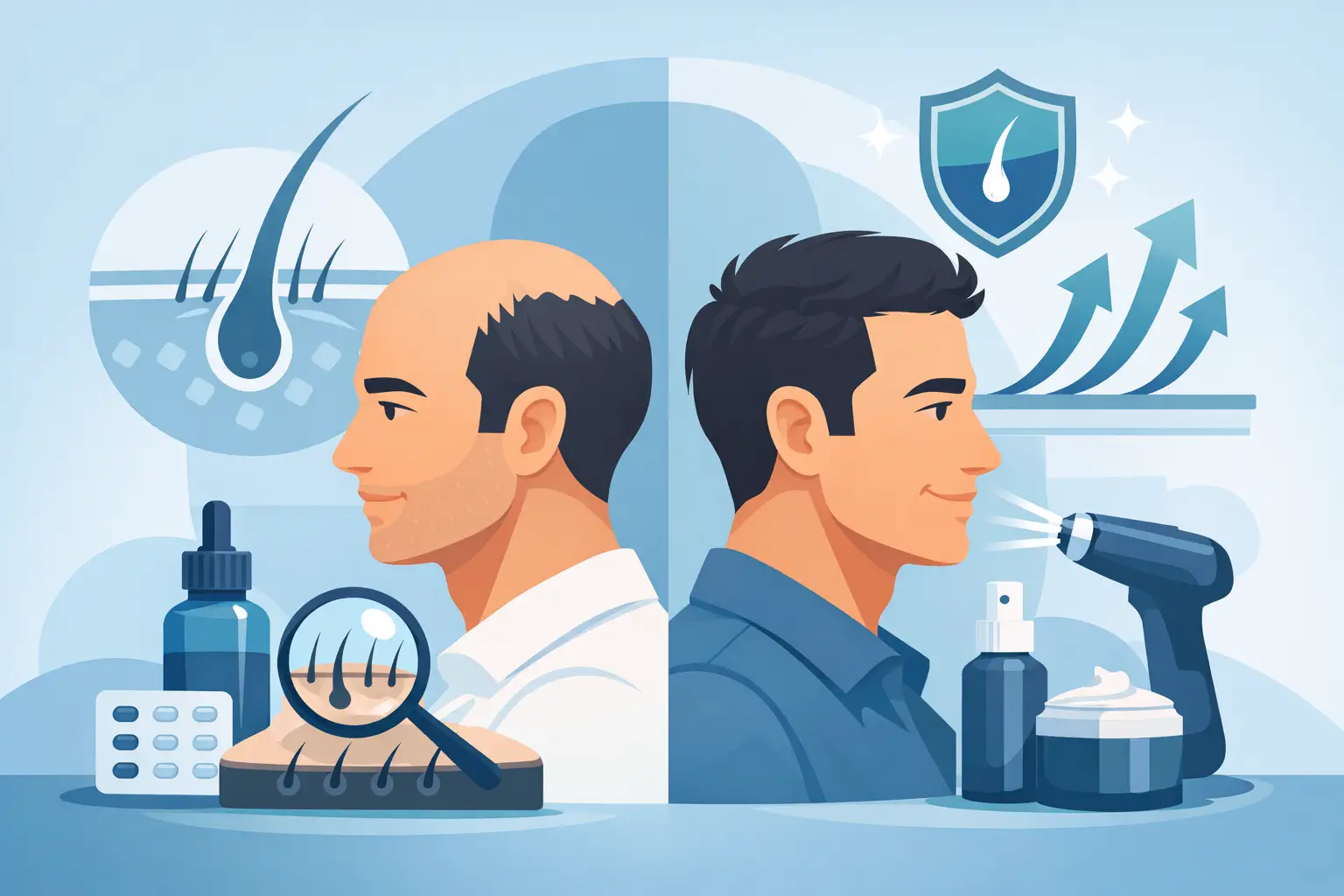
Male Baldness and Treatments That May Help
A widening parting, more scalp visible under bright bathroom light, or hair collecting on the pillow can make male baldness feel far more urgent than it may appear to anyone else. Hair loss is common, but that does not make it easy to ignore. The useful next step is to understand the likely cause and consider treatment early, rather than relying on expensive products that promise more than they can deliver.
What causes male baldness?
The most common cause is androgenetic alopecia, also known as male pattern hair loss. It is influenced by genetics and hormones, particularly a hormone called dihydrotestosterone (DHT). In people with a genetic sensitivity, DHT gradually shrinks hair follicles. Individual hairs become finer and grow for shorter periods, until some follicles stop producing visible hair.
Male pattern hair loss usually follows a recognisable pattern. The hairline may recede at the temples, creating an M-shaped appearance, or thinning may begin at the crown. Over time, these areas can join. The rate of change varies widely. Some men notice gradual thinning over decades, while others see a more noticeable change in their twenties or thirties.
It is not caused by washing your hair too often, wearing a hat, or using styling products. However, poor general health, stress and some medical conditions can affect how hair looks and sheds, which is why a sudden change deserves attention.
When hair loss may be caused by something else
Not all hair loss is male pattern baldness. A sudden increase in shedding, bald patches, scalp discomfort or loss of hair elsewhere on the body should be assessed by a healthcare professional. These signs can point to a different cause and may need a different approach.
Temporary shedding can happen after illness, major stress, rapid weight loss or surgery. This is often called telogen effluvium and may become apparent several months after the triggering event. Hair may recover as the body returns to its usual cycle, although this can take time.
Patchy hair loss can be linked to alopecia areata, an autoimmune condition. Scaly, sore or inflamed skin may suggest a scalp condition that needs treatment. Certain medicines, nutritional deficiencies and thyroid problems can also contribute to hair thinning. It is better not to assume every type of hair loss is genetic, especially if the pattern is unusual or the change has been quick.
Treatments for male baldness that have evidence behind them
There is no guaranteed permanent cure for genetic hair loss, but treatment can slow further thinning and, for some people, improve hair density. Results depend on your age, the extent of hair loss and how consistently treatment is used. Starting while follicles are still active generally gives the best chance of maintaining hair.
Finasteride
Finasteride is a prescription medicine used for male pattern hair loss. It works by reducing the amount of DHT in the body, helping to protect susceptible hair follicles. It is usually taken as a daily tablet.
For many men, finasteride is most helpful for preventing further loss. Some also notice regrowth or thicker-looking hair, particularly at the crown. Treatment needs patience: it may take three to six months before changes are apparent, and up to a year to judge the full effect.
As with any medicine, side effects are possible. These can include reduced libido, difficulty getting or keeping an erection, ejaculation changes, low mood and breast tenderness or enlargement. They are uncommon but should be considered carefully. Finasteride is not suitable for everyone, so an online consultation should include your medical history, current medicines and any concerns about side effects.
Minoxidil
Topical minoxidil is applied directly to the scalp, usually once or twice daily depending on the product. It is available without prescription and can be used by men with early or more established thinning. It is thought to support the growth phase of the hair cycle and increase the size of miniaturised follicles.
Minoxidil can be a useful option on its own, particularly for men who do not want tablets, and is sometimes used alongside finasteride. Early shedding can occur in the first few weeks. This may be unsettling, but it can be part of the way the treatment resets the hair cycle. Speak to a pharmacist or prescriber if shedding is severe or you are unsure whether to continue.
The solution or foam may cause itching, dryness or irritation, especially on sensitive skin. Avoid applying more than directed, and wash your hands after use. If you develop chest pain, dizziness, a rapid heartbeat or swelling, stop using it and seek medical advice promptly.
Other options to consider realistically
Hair fibres, thicker-looking shampoos and a different haircut can make thinning less noticeable, but they do not change the underlying hair-loss process. These can still be worthwhile if you want a quick cosmetic solution while deciding whether treatment is right for you.
Low-level laser devices and supplements are widely marketed, but the evidence and likely benefit can vary. A supplement is unlikely to reverse male pattern baldness unless a confirmed nutritional deficiency is contributing to hair loss. Be cautious with products that claim dramatic regrowth in a matter of weeks.
Hair transplantation can offer a longer-lasting cosmetic result for suitable candidates. It is a surgical procedure, requires enough donor hair and does not stop future loss in untreated areas. Many people still use medical treatment after a transplant to protect their existing hair.
How to choose a treatment approach
The right option depends on what matters most to you. If your priority is convenience, a daily prescription tablet may suit you. If you would rather avoid systemic medicine, topical minoxidil could be a reasonable starting point. Some men choose both after discussing the risks and benefits with a qualified prescriber.
Think about what you can maintain. Hair-loss treatments work only while they are used. If finasteride or minoxidil is stopped, any benefit is likely to fade over the following months as the underlying process resumes. This does not mean treatment has failed – it reflects the ongoing nature of male pattern hair loss.
Photographing your hairline and crown in the same lighting every few months can give a clearer picture than checking the mirror every day. Hair changes slowly, and daily scrutiny can make it harder to judge progress fairly.
Getting treatment privately and discreetly
An online consultation can be a straightforward route to treatment for suitable adults. You answer questions about your hair loss, medical history and current medicines, allowing a qualified prescriber to decide whether a prescription treatment is appropriate. It also gives you a chance to raise concerns privately, including possible side effects or changes in sexual function.
Your Chemists offers a convenient way to request suitable hair-loss treatment online, with clinical review and discreet delivery where prescribed. Be honest during the consultation, particularly about mood changes, fertility plans, liver problems or any medicines you already take. Accurate information helps the prescriber make a safe decision.
Male baldness can affect confidence, but it does not have to dictate how you feel about your appearance. Whether you choose treatment, a cosmetic change or simply time to consider your options, a calm, informed decision is usually the best place to start.