




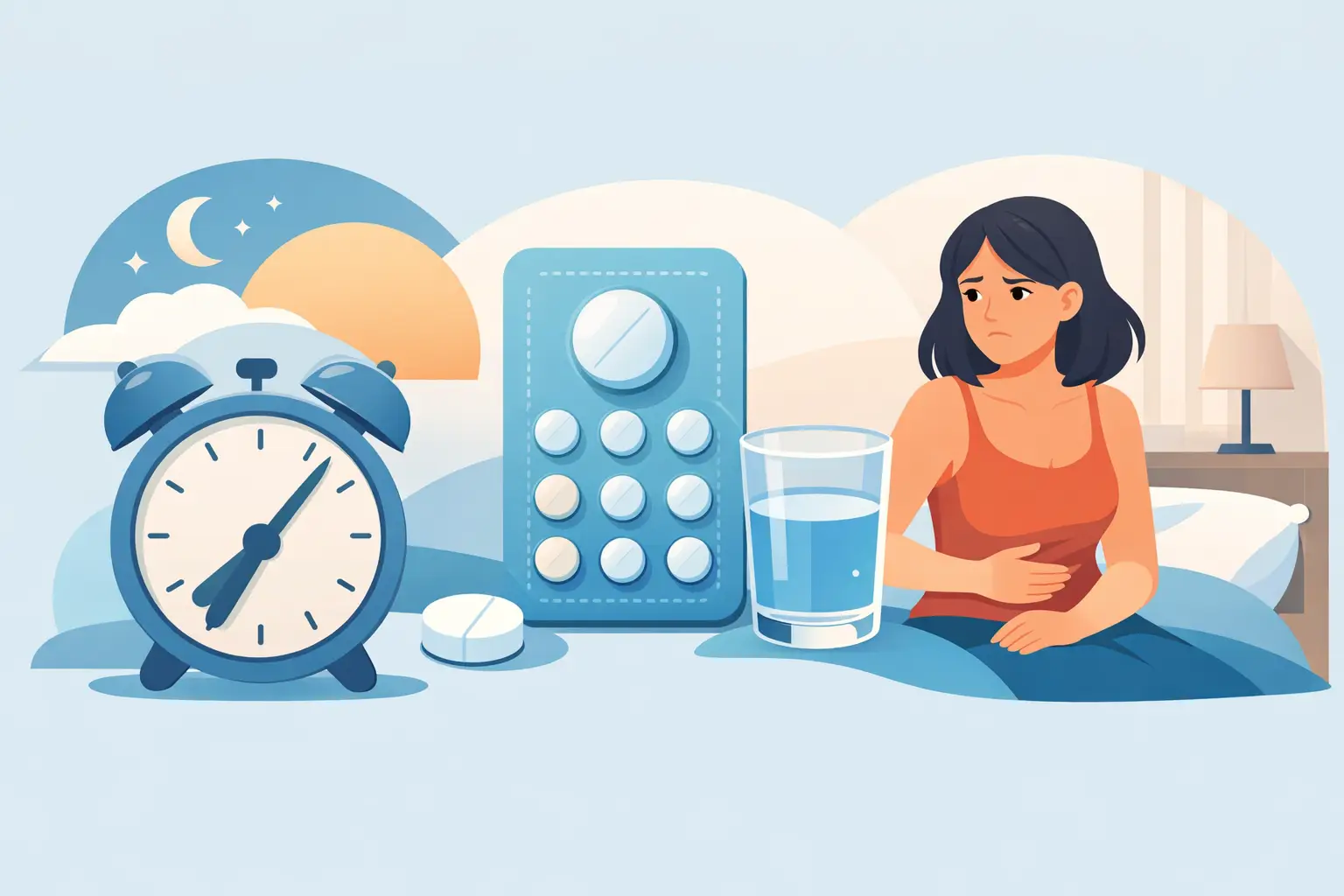
Morning After Pill: When to Take It and What to Expect
A contraception failure can feel urgent, whether a condom has split, you have missed regular pills, or sex happened without contraception. The morning after pill is emergency contraception designed to reduce the chance of pregnancy after unprotected sex. It works best when taken as soon as possible, so acting promptly matters more than waiting to see what happens.
It is a private, time-sensitive healthcare decision, not something you need to feel embarrassed about. A pharmacist or prescriber can help you choose the most suitable option based on when sex happened, your usual contraception, medicines you take and any relevant health information.
What is the morning after pill?
The morning after pill is a tablet used after unprotected sex or a contraception problem. Despite its name, it does not have to be taken the next morning. Depending on the type, it may be suitable for use up to three or five days after sex.
It works mainly by delaying or preventing ovulation, which is when an egg is released. If ovulation has already happened, an oral emergency contraceptive may be less likely to work. This is why the sooner you take it, the better.
The morning after pill does not end an established pregnancy and is not the same as an abortion pill. It will not protect you from pregnancy if you have unprotected sex again later in the same cycle, and it does not protect against sexually transmitted infections (STIs).
The two types of emergency contraceptive pill
There are two main emergency contraceptive pills available in the UK. Both are effective options, but they have different time limits and considerations.
Levonorgestrel
Levonorgestrel should be taken within 72 hours, or three days, of unprotected sex. It is generally more effective the earlier it is taken. You can usually start or continue your regular hormonal contraception straight away after taking levonorgestrel, although you will need to use condoms or avoid sex for a short period while your usual method becomes reliable again.
Ulipristal acetate
Ulipristal acetate can be taken within 120 hours, or five days, of unprotected sex. It may be the more suitable pill where more time has passed, but it interacts differently with hormonal contraception. After taking ulipristal acetate, you normally need to wait five days before restarting hormonal contraception. You should then use condoms or avoid sex until your contraception is working again.
That difference is one reason an online consultation or pharmacist assessment is useful. The right choice is not simply about which tablet has the longest window. It depends on the timing of sex, where you are in your cycle and whether you use a hormonal method already.
When should you consider emergency contraception?
Emergency contraception may be appropriate after sex without contraception, but also when your usual method may not have worked. This can include a broken or slipped condom, missed contraceptive pills, a late injection, a patch or vaginal ring problem, or vomiting or severe diarrhoea that may have affected pill absorption.
Do not wait for symptoms or a missed period before seeking advice. Pregnancy symptoms cannot tell you whether emergency contraception will work, and delaying can reduce your options. If you are unsure whether your contraception failure counts, it is sensible to ask. A quick assessment can clarify what you need to do.
The copper coil, also called a copper IUD, is the most effective form of emergency contraception and can be fitted within five days of unprotected sex in suitable circumstances. It can then provide ongoing contraception. It requires an appointment for fitting, so it may not be the most convenient option for everyone, but it is worth discussing if you want the most effective emergency option or need longer-term contraception.
How effective is the morning after pill?
No emergency contraceptive pill is 100% effective. Its effectiveness depends largely on how quickly it is taken and whether ovulation has already occurred. Taking the pill as soon as possible gives it the best chance to work.
Body weight, body mass index (BMI), certain medicines and medical conditions can also affect which option is appropriate. In particular, some medicines can make oral emergency contraception less effective. These include certain treatments for epilepsy, tuberculosis and HIV, as well as St John’s wort. Tell the prescriber or pharmacist about all medicines, supplements and herbal remedies you use, even if you only take them occasionally.
If you are taking regular hormonal contraception, mention the exact type and when you last used it. This helps ensure you receive clear advice on whether to continue, pause or restart it, and for how long you need to use additional protection.
What to expect after taking it
Most people have no serious problems after taking emergency contraception. Possible short-term side effects include nausea, headache, dizziness, tiredness, breast tenderness and mild lower abdominal discomfort. These usually settle without treatment.
Your next period may arrive earlier or later than expected, and it may be lighter, heavier or a little different from usual. This can be worrying, but a changed period is common after emergency contraception.
If you vomit within three hours of taking the tablet, contact a pharmacist or prescriber promptly. You may need another dose or a different emergency contraception option. Do not assume the tablet has worked if it may not have been absorbed.
Seek urgent medical advice if you develop severe or unusual lower abdominal pain, especially if you also have a late period or a positive pregnancy test. Although uncommon, this needs assessment to rule out an ectopic pregnancy.
When to take a pregnancy test
Take a pregnancy test three weeks after the most recent unprotected sex, even if you have had bleeding or what seems like a period. Test sooner if your period is more than seven days late, unusually light, much shorter than usual, or if you have symptoms that could suggest pregnancy.
A positive test after emergency contraception does not mean the pill has caused harm. The pill does not interrupt a pregnancy that has already started. Contact a healthcare professional for confidential advice about your next steps.
Protecting yourself for the rest of the cycle
Emergency contraception is for occasional, urgent use. It does not replace a regular contraceptive method, and it will not cover any further unprotected sex after you take it. Use condoms or follow the specific additional-contraception advice given with your treatment until your usual method is effective again.
If there is any chance you were exposed to an STI, consider arranging an STI test. Condoms reduce the risk of many infections as well as pregnancy, although they are not perfect protection against every infection spread through skin-to-skin contact.
Getting discreet, timely advice
When time is limited, a regulated online pharmacy can make access simpler. After completing a confidential consultation, a qualified prescriber can review whether the morning after pill is suitable and advise on the most appropriate treatment based on your circumstances. Be accurate about dates, contraception use and medicines so your assessment is as safe as possible.
Your Chemists offers a straightforward route to treatment with professional oversight and discreet delivery options where appropriate. If delivery timing would mean missing the treatment window, seek same-day advice from a local pharmacy, sexual health service or another urgent healthcare provider instead.
The most helpful next step is usually the simplest one: get advice as soon as you can, take the recommended treatment promptly, and set a reminder for a pregnancy test in three weeks.