




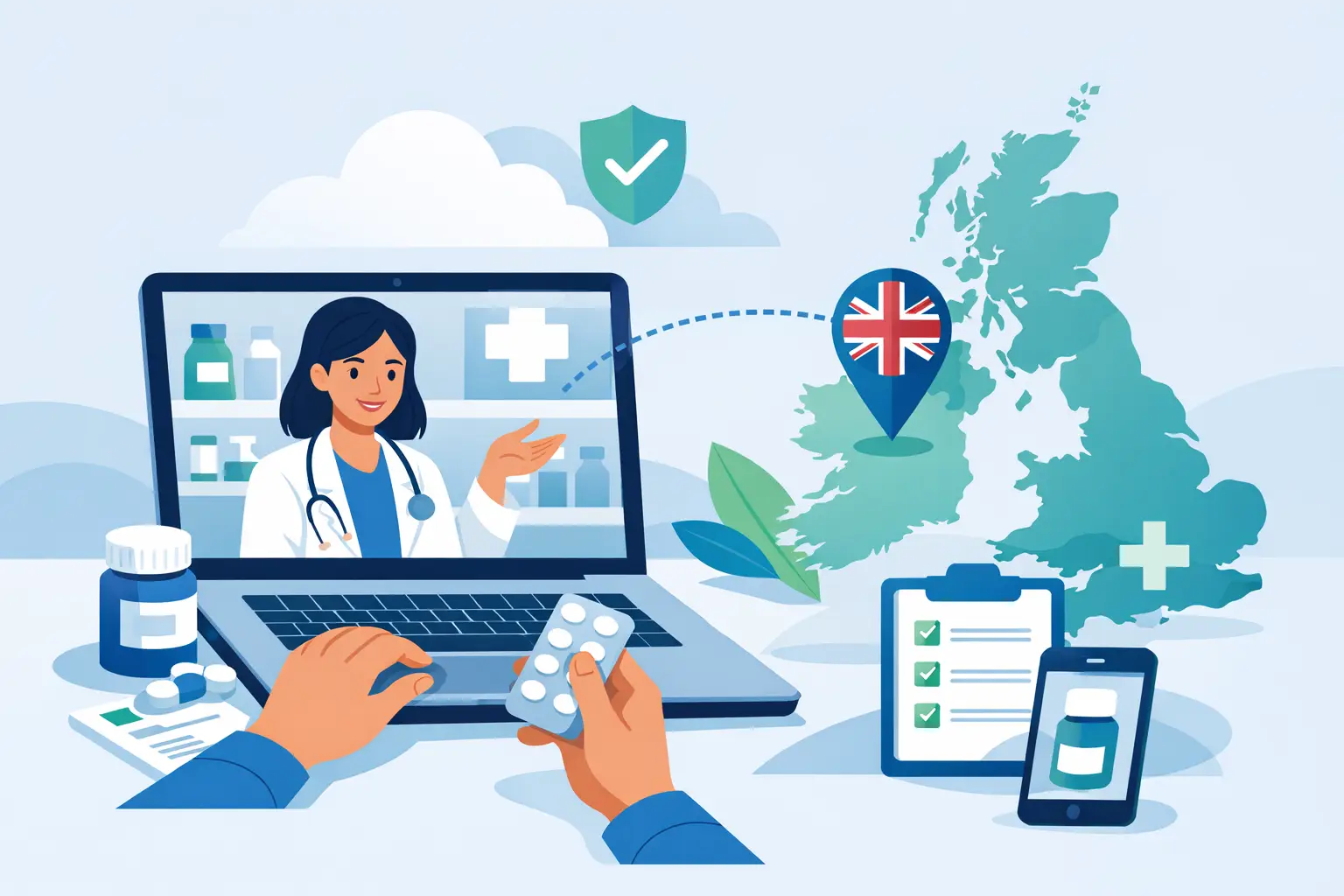
Can Pharmacists Prescribe Online in the UK?
Needing treatment should not always mean rearranging your day for an appointment. But can pharmacists prescribe online when you need help with a sensitive or everyday health concern? In many cases, yes – provided the pharmacist is appropriately qualified to prescribe and has enough clinical information to make a safe decision.
Online pharmacist prescribing can offer a private, straightforward route to suitable treatment for a range of conditions. It is not a shortcut around clinical care. A proper online service uses a health questionnaire, clinical checks and, where appropriate, follow-up questions before a prescription is issued.
Can pharmacists prescribe online safely?
A pharmacist can prescribe online in the UK if they are an independent prescriber or are supplying treatment under another legally recognised prescribing arrangement. Not every pharmacist is an independent prescriber, so this qualification matters. Independent prescribers have completed additional training that allows them to assess patients and prescribe within their professional competence.
Safety depends on more than the qualification alone. The prescriber needs to understand your symptoms, relevant medical history, current medicines, allergies and any factors that could make a treatment unsuitable. That is why a reputable online consultation asks clear questions, rather than simply allowing anyone to select prescription medicine and check out.
For many straightforward conditions, an online assessment provides enough information for a clinical decision. This may include requests for treatment for acne, migraine, cystitis, thrush, cold sores, acid reflux, eczema, hair loss, erectile dysfunction or contraception. Some services can also assess suitability for weight loss treatment, where this is clinically appropriate.
There are limits. An online prescriber may decide that treatment is not suitable, ask for more information, or advise an in-person assessment instead. That is a sign of careful clinical practice, not an inconvenience.
How an online pharmacist consultation works
The process is designed to be practical while keeping the clinical assessment at its centre. You choose the treatment or condition you need help with, then complete a confidential questionnaire. Questions may cover your symptoms, how long you have had them, previous treatments, medical conditions and medicines you take.
A qualified prescriber reviews the information before making a decision. If the treatment is appropriate, they can issue a private prescription for the pharmacy to dispense. If your answers raise a concern, they may contact you for clarification or explain why another route to care would be safer.
Once approved, the medicine is dispensed by the pharmacy and sent discreetly to your chosen address. This can be particularly helpful for people managing busy work schedules, parents with limited free time, or anyone who would rather discuss conditions such as sexual health, hair loss or period delay privately.
A good online service should make the process feel clear rather than rushed. You should know that a clinical review takes place, understand the expected delivery times, and have a way to contact the pharmacy if you have a question about your order or treatment.
What conditions are suitable for online prescribing?
Online prescribing is usually best suited to conditions that are common, relatively straightforward to assess through a structured consultation and have established treatment options. It can be especially useful when you already recognise the symptoms, have used a treatment before, or need a clinically appropriate option without unnecessary delay.
For example, an online prescriber may be able to assess treatment requests for seasonal allergies, bacterial vaginosis, genital herpes, rosacea, nail infections, malaria prevention, stop smoking support and selected sexual health treatments. They can also review whether certain medicines are suitable for symptoms such as IBS, arthritis discomfort or premature ejaculation.
However, suitability always depends on the individual. The same symptoms can have different causes, and a medicine that worked safely for one person may not be right for another. Your answers need to be complete and accurate, particularly if you are pregnant, breastfeeding, have long-term health conditions, or take regular medication.
Some concerns require a face-to-face examination, tests, monitoring, or more urgent treatment. New or severe symptoms, symptoms that are getting worse, recurring problems without a clear diagnosis, or unexpected side effects should not be managed by repeatedly ordering treatment online.
What a pharmacist prescriber checks before approving treatment
The clinical review is there to protect you. Pharmacist prescribers consider whether your symptoms fit the condition being treated, whether the medicine could interact with other medication, and whether there are reasons you should not take it.
They will also consider dose, previous treatment response and whether a different option may be more appropriate. For certain treatments, details such as your age, weight, blood pressure history, smoking status or risk factors can affect whether prescribing is safe.
It is tempting to rush through a questionnaire when you are feeling unwell or want a quick delivery. Taking a few extra minutes to answer honestly is one of the most useful things you can do. Do not leave out medicines bought elsewhere, supplements, allergies or a previous reaction to treatment. These details can change the prescriber’s decision.
If a pharmacist cannot prescribe, they should explain the next sensible step. Depending on your symptoms, this may mean contacting your GP practice, visiting an urgent treatment service, seeking sexual health support, or getting emergency help.
Online prescribing is convenient, but it is not for emergencies
The main benefit of online care is access: you can complete a consultation at a time that suits you, without sitting in a waiting room or having an awkward conversation at a pharmacy counter. For appropriate conditions, it can reduce delays and make it easier to start treatment promptly.
Convenience should never replace urgent care. Do not wait for an online prescription if you have chest pain, severe breathing difficulty, signs of a serious allergic reaction, sudden weakness or confusion, heavy bleeding, a severe headache unlike any you have had before, or thoughts of harming yourself. Call 999 or attend A&E for an emergency.
You should also seek prompt medical advice for severe abdominal pain, a high fever with worsening symptoms, rapidly spreading skin changes, or a possible serious infection. Online questionnaires cannot examine you or respond to a medical emergency in real time.
How to choose a trustworthy online pharmacy
When buying prescription treatment online, check that the provider operates as a legitimate UK pharmacy and that prescribing is carried out by an appropriately qualified clinician. A trustworthy provider is open about its pharmacy registration, superintendent pharmacist and contact details. It should also make clear that prescriptions are issued only following a clinical assessment.
Be cautious of websites that promise prescription medicine without asking meaningful health questions, offer treatments that sound too good to be true, or make it difficult to identify who is responsible for your care. Low prices are not a substitute for a safe prescribing process.
You should expect discreet packaging, secure handling of your personal information and clear medicine information with your order. It should be easy to understand how to use the treatment, what side effects to look out for and when to seek further advice.
Your Chemists combines online consultations with regulated pharmacy dispensing, helping eligible adults access appropriate treatment with the reassurance of pharmacist-led clinical review.
Getting the right help without unnecessary delay
Online pharmacist prescribing gives many people a practical way to access treatment for common health concerns. It works best when you use it honestly, choose a regulated provider and recognise when your symptoms need a different level of care.
If your condition is suitable, an online consultation can be a discreet and convenient first step. If it is not, a careful prescriber will point you towards the support that is safest for you – which is exactly what good healthcare should do.