




Female Hair Loss Causes and Treatment Options
Seeing more hair in the shower, on your pillow or caught in your brush can feel worrying, particularly when it seems to happen suddenly. Female hair loss is common, but it is not one condition with one solution. The pattern, timing and possible cause all matter when deciding what to do next.
For some women, shedding settles once the trigger has passed. For others, gradual thinning needs longer-term treatment and support. A clear assessment can help you avoid spending money on products that are unlikely to address the cause.
What does female hair loss look like?
Hair naturally goes through cycles of growth, resting and shedding. Losing some strands each day is normal. Hair loss becomes more noticeable when shedding increases, new growth slows down, or individual hairs become finer over time.
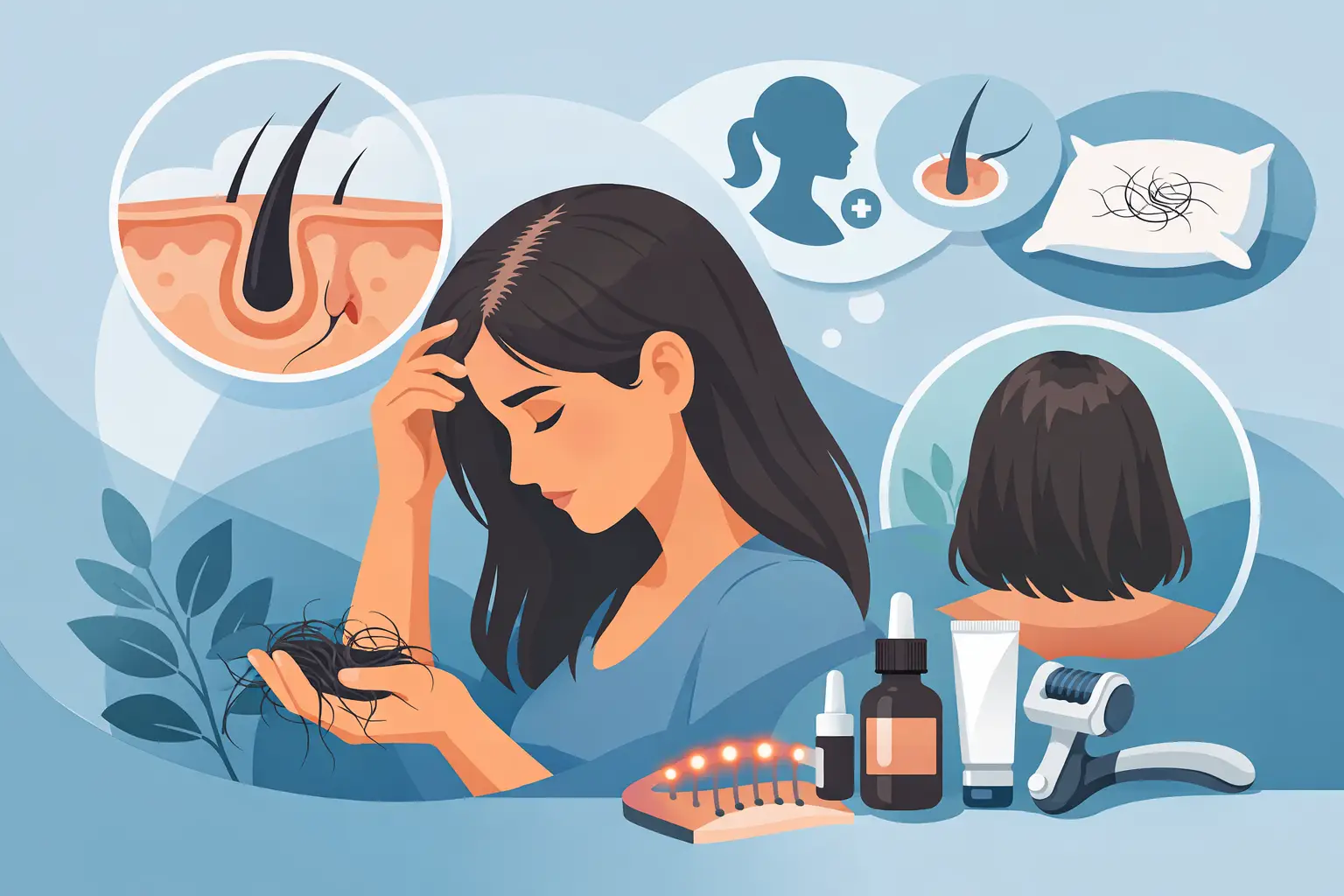
Female pattern hair loss often causes a gradual widening of the parting or reduced volume over the top of the scalp. The front hairline is usually retained, unlike some patterns of hair loss seen in men. It can begin at any age, although it becomes more common around and after the menopause.
Other people notice more diffuse shedding across the whole scalp. You may see this when washing or styling your hair, without a clear bald patch. Patchy loss, a receding hairline, redness, soreness or scaling on the scalp may point to a different condition and should be assessed by a clinician.
Common causes of hair loss in women
The reason for hair loss is not always obvious. It can also be more than one thing at once. A healthcare professional will usually consider your symptoms, medical history, medicines and hair-loss pattern before recommending a suitable approach.
Female pattern hair loss
This is the most common cause of ongoing hair thinning in women. It is influenced by genetics and the way hair follicles respond to hormones. The hairs gradually become finer and spend less time in their growth phase. It tends to progress slowly, though the rate varies from person to person.
Temporary shedding after a trigger
Telogen effluvium is a common form of temporary, widespread shedding. It may occur several weeks or months after an illness, operation, significant stress, rapid weight change, childbirth or a restrictive diet. Hair often starts to recover once the trigger has resolved, but regrowth can take time.
Hormonal changes and health conditions
Pregnancy, stopping hormonal contraception, menopause and conditions that affect hormone levels can all influence the hair-growth cycle. Thyroid conditions, low iron stores and nutritional deficiencies may also contribute to thinning or shedding. If you have other symptoms, such as tiredness, changes in weight, irregular periods, new facial hair growth or feeling unusually cold or hot, seek medical advice rather than assuming the issue is purely cosmetic.
Hair care and traction
Tightly pulled hairstyles, extensions, frequent chemical processing and high heat can damage hair or put ongoing tension on follicles. This is known as traction alopecia. Adjusting your hair routine early can make a real difference, but long-standing traction may lead to permanent loss in affected areas.
Medicines and scalp conditions
Some prescribed medicines can cause increased shedding, while scalp problems such as psoriasis, eczema or fungal infection may affect the way hair looks and feels. Do not stop a prescribed medicine without speaking to the clinician who prescribed it. A pharmacist or doctor can help you understand whether a medicine could be relevant.
When to get medical advice
It is sensible to seek advice if your hair loss is sudden, severe, patchy or getting worse. The same applies if your scalp is painful, inflamed or scarred, or if you are losing hair from your eyebrows or other areas of the body.
You should also arrange an assessment if hair loss is affecting your wellbeing, or if it comes with symptoms that could suggest an underlying health concern. Early advice is especially useful for female pattern hair loss, because treatments are generally better at maintaining existing hair than restoring follicles that have been inactive for a long time.
Bring a clear timeline to your consultation. Note when the shedding began, whether you had an illness or major life change beforehand, any medicines or supplements you take, and whether close relatives have experienced thinning. Photographs of your parting taken in similar light each month can also help you judge change more accurately.
Female hair loss treatment options
The right treatment depends on the diagnosis. If the cause is temporary shedding, addressing the trigger and giving the growth cycle time to settle may be the main plan. If there is an underlying condition, treatment should focus there first.
For female pattern hair loss, topical minoxidil is a commonly used treatment. It is applied to the scalp and works by supporting the hair-growth phase. It is not an instant fix: visible benefit may take several months, and a short period of increased shedding can happen when treatment is started. Continued use is usually needed to maintain any improvement.
Minoxidil is not suitable for everyone. It should not be used during pregnancy or breastfeeding unless a clinician has specifically advised otherwise. Scalp irritation and unwanted hair growth elsewhere can occur, particularly if the product runs onto the face. Follow the product directions carefully and wash your hands after applying it.
Some women may need prescription treatment following a clinician’s assessment. This is particularly relevant where hormonal factors are suspected or hair loss is more advanced. Prescription options have potential side effects and may require contraception or monitoring, so they are not a substitute for a proper consultation.
Supplements are often marketed as a quick answer, but they only help when a relevant deficiency is present. Taking high-dose vitamins or minerals without advice can be unhelpful and, in some cases, harmful. A varied diet with enough protein, iron-containing foods and essential nutrients supports normal hair growth, but it cannot reverse every cause of hair thinning.
A realistic approach to regrowth
Hair grows slowly, so progress is best measured in months rather than days. Before-and-after photographs can be more reliable than checking your hair every morning, when normal variation can feel alarming. Aim for the same parting, angle and lighting when taking photographs.
Be cautious with products that promise dramatic regrowth in a few weeks. Shampoos and conditioners can improve how hair feels and reduce breakage, but they do not usually treat the follicle-level causes of female pattern hair loss. Gentle washing, reduced heat styling and looser hairstyles are worthwhile supportive steps, particularly if your hair is fragile.
Stress can make coping with hair changes harder, even when it is not the original cause. If hair loss is affecting your confidence or day-to-day life, speak openly about it during a consultation. Cosmetic approaches such as volumising cuts, hair fibres or a change in parting can provide useful confidence while medical treatment takes effect.
Getting discreet support online
For appropriate cases, an online consultation can offer a private, straightforward route to professional advice about hair-loss treatment. You will normally answer questions about your symptoms, health history, current medicines and whether you are pregnant, planning pregnancy or breastfeeding. A qualified prescriber can then decide whether treatment is suitable.
Yourchemists combines online convenience with regulated pharmacy care, helping eligible patients access treatment without unnecessary delays. Be honest in your consultation and follow any safety advice provided. If your symptoms suggest a condition that needs examination or further investigation, you may be directed to seek in-person medical care instead.
Hair loss can feel personal, but you do not have to accept uncertainty or rely on guesswork. Getting the cause checked, starting suitable treatment early where needed and allowing time for results gives you the clearest path forward.