




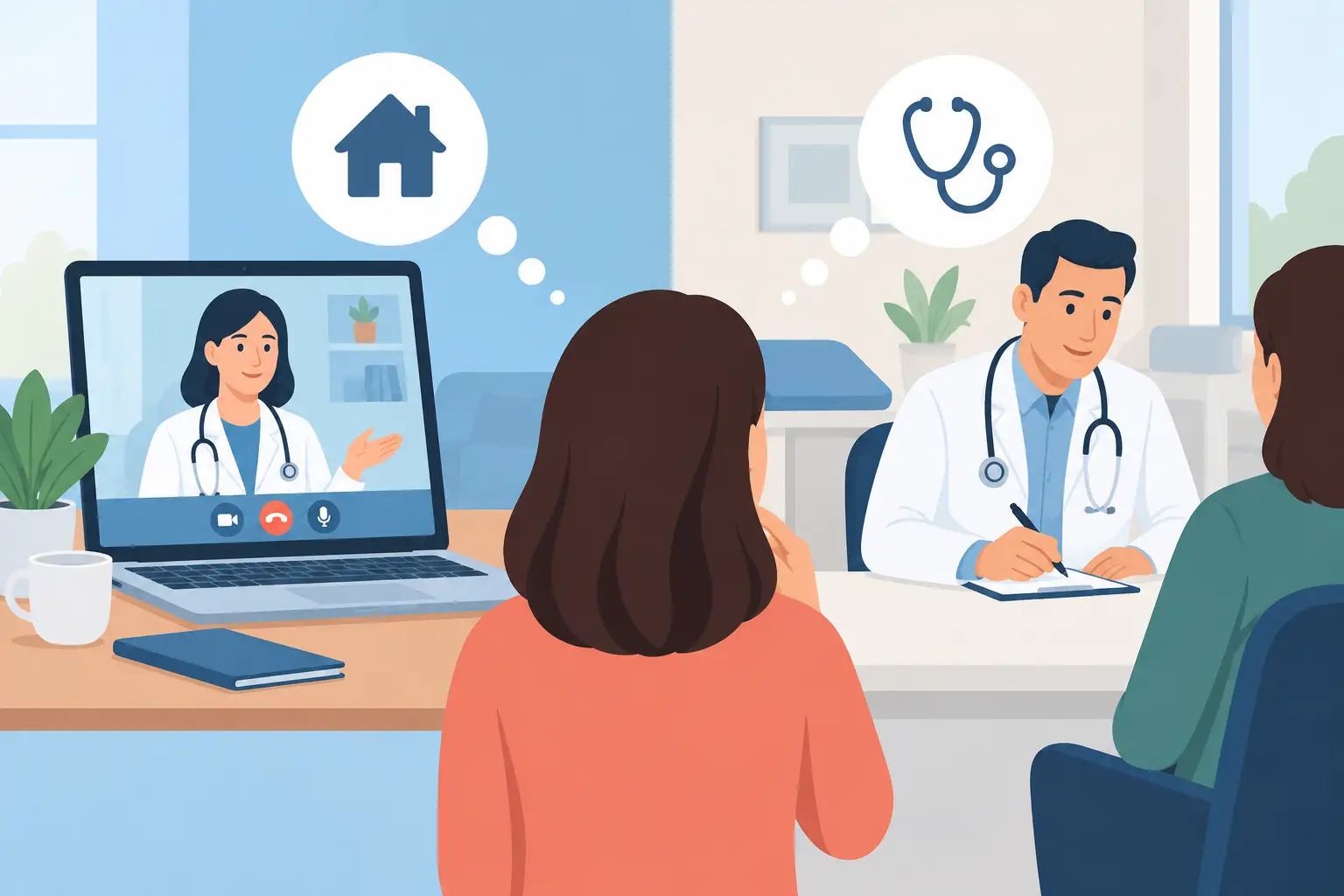
Online Doctor Versus GP Visit – Which Is Right?
A rash appears before a weekend away. A migraine returns during a packed working week. Or you need discreet advice about contraception, erectile dysfunction or thrush, without sitting in a waiting room. In these moments, the choice between an online doctor versus GP visit is less about one being universally better than the other and more about getting the right kind of care at the right time.
For many straightforward health concerns, an online consultation can offer a private and convenient route to clinician-reviewed treatment. For symptoms that need examination, tests or ongoing medical investigation, a face-to-face GP appointment remains the safer option. Knowing the difference can help you act with confidence rather than delay getting support.
Online doctor versus GP visit: the key difference
An online doctor service is designed for suitable conditions that can often be assessed safely through a structured medical questionnaire, sometimes with follow-up questions from a clinician. You provide details about your symptoms, medical history, current medicines and allergies. A qualified prescriber reviews the information and decides whether treatment is appropriate.
A GP visit is broader in scope. It allows for a physical examination and can be more appropriate where a clinician needs to listen to your chest, examine an affected area, check observations or investigate a problem that is new, complex or worsening. Your GP is also well placed to coordinate care for long-term conditions and understand the wider picture of your health over time.
Neither route should be treated as a shortcut around safety. A reputable online provider will decline treatment or direct you to another service when an online assessment is not suitable. That safeguard matters just as much as convenience.
When an online consultation may suit you
Online care can be a practical choice when you recognise a common condition, your symptoms are mild to moderate, and you can give clear, accurate information. It is particularly useful for adults who need privacy, flexibility and a simple way to access treatment without rearranging work, childcare or travel.
For example, online consultations may be suitable for certain episodes of cystitis, cold sores, acne, eczema, acid reflux, allergy symptoms or thrush. They can also provide a discreet route for treatments relating to period delay, contraception, hair loss, erectile dysfunction or premature ejaculation, where clinically appropriate.
The process is usually straightforward. You complete an online consultation in your own time, answer questions honestly and provide any requested details. The prescriber reviews whether the requested treatment is safe and appropriate for you. If approved, medication can be dispensed by a regulated pharmacy and sent discreetly to your chosen address.
This can make a real difference for a busy parent dealing with a familiar eczema flare-up, a professional seeking treatment for a cold sore before a meeting, or someone who would simply prefer not to discuss a sensitive concern in a crowded reception area. Convenience is valuable, but it should always sit alongside a proper clinical review.
Privacy without compromising care
Some health concerns are difficult to raise face to face, even when there is no reason to feel embarrassed. Online consultations give you the space to describe symptoms carefully and privately. You can complete the questions at a time that works for you and avoid explaining your reason for an appointment to several people first.
However, privacy should never mean withholding information. Mention all relevant symptoms, medications, allergies, existing conditions and recent changes in your health. The prescriber can only make a safe decision with a complete picture.
Speed for appropriate, routine needs
Online services can often be quicker than waiting for an appointment when the condition is suitable for remote assessment. Once a prescription is approved, prompt dispensing and delivery can make treatment easier to fit around daily life.
Speed does not mean a guaranteed prescription. A clinician may ask further questions, recommend a different option or advise that you need an in-person assessment. That is a sign that the service is putting your wellbeing first.
When a GP visit is the better choice
Choose a GP appointment when symptoms are unexplained, persistent, severe, recurrent or affecting your day-to-day life. A face-to-face assessment is especially useful if you think you may need a physical examination or if you are worried that several symptoms could be connected.
For instance, a new mole, ongoing abdominal pain, repeated migraines that are changing in pattern, breathlessness, unexplained weight change or a skin problem that is spreading may need closer assessment than an online consultation can provide. The same applies if a treatment you have used before is no longer helping or is causing side effects.
Your GP is also usually the right route for complex health needs. This includes managing several conditions at once, reviewing medicines that may interact, assessing a long-standing problem or deciding whether you need specialist input. Continuity can be particularly helpful when your health concerns do not fit neatly into a single consultation.
Do not wait with urgent symptoms
Some symptoms need urgent medical attention rather than an online consultation or a routine GP appointment. Seek urgent help for severe chest pain, difficulty breathing, signs of a serious allergic reaction, sudden weakness or confusion, severe bleeding, loss of consciousness, or thoughts of harming yourself.
If you are unsure about the severity of a symptom, it is safer to seek urgent clinical advice. Online treatment services are intended for suitable, non-emergency concerns and should not be used to manage a medical emergency.
Questions to ask before choosing online care
Before completing an online consultation, consider whether your symptoms match a condition you have had before, whether you can describe them clearly and whether you have any warning signs. It is also worth asking yourself if you need reassurance through an examination, rather than treatment alone.
Be cautious if you are pregnant, breastfeeding, taking regular medication, have allergies, or live with conditions such as heart, kidney or liver disease. These factors do not automatically rule out online treatment, but they can affect which medicines are appropriate. Tell the clinician rather than making assumptions.
It is also sensible to check who is providing the service. A legitimate online healthcare provider should be clear about its pharmacy regulation, the professionals involved in prescribing and how to contact the team. Treatment should be supplied only after a clinical assessment, not simply added to a basket without questions.
Getting the best from an online consultation
A good consultation starts before you answer the first question. Take a moment to check when your symptoms began, what makes them better or worse, whether you have tried any treatments and whether anything has changed since a previous episode. If the condition affects your skin, a clear photograph may be requested and can help the prescriber assess it.
Answer every question accurately, including those that feel unrelated to the condition. Questions about blood pressure, smoking, medicines or past health issues may be relevant to treatment safety. Do not select an answer you think will make approval more likely. The right outcome may be treatment, a different treatment, or advice to seek an examination.
If medication is prescribed, read the patient information supplied with it and follow the directions carefully. Seek further advice if symptoms do not improve as expected, become worse or return frequently. An online consultation is part of your healthcare, not a reason to ignore changes that need attention.
A practical choice, guided by your symptoms
For straightforward, suitable conditions, online treatment can remove unnecessary friction from getting care. It offers discretion, clinician review and delivery to your door, while allowing you to deal with a health concern on a timetable that suits you. At Yourchemists, online consultations are reviewed with the same focus on safe, appropriate treatment that patients should expect from any regulated healthcare provider.
A GP visit remains the right choice when symptoms need examining, your medical situation is complicated or something does not feel right. The most helpful question is not whether online care replaces a GP. It is whether the route you choose gives your symptoms the attention they genuinely need.