




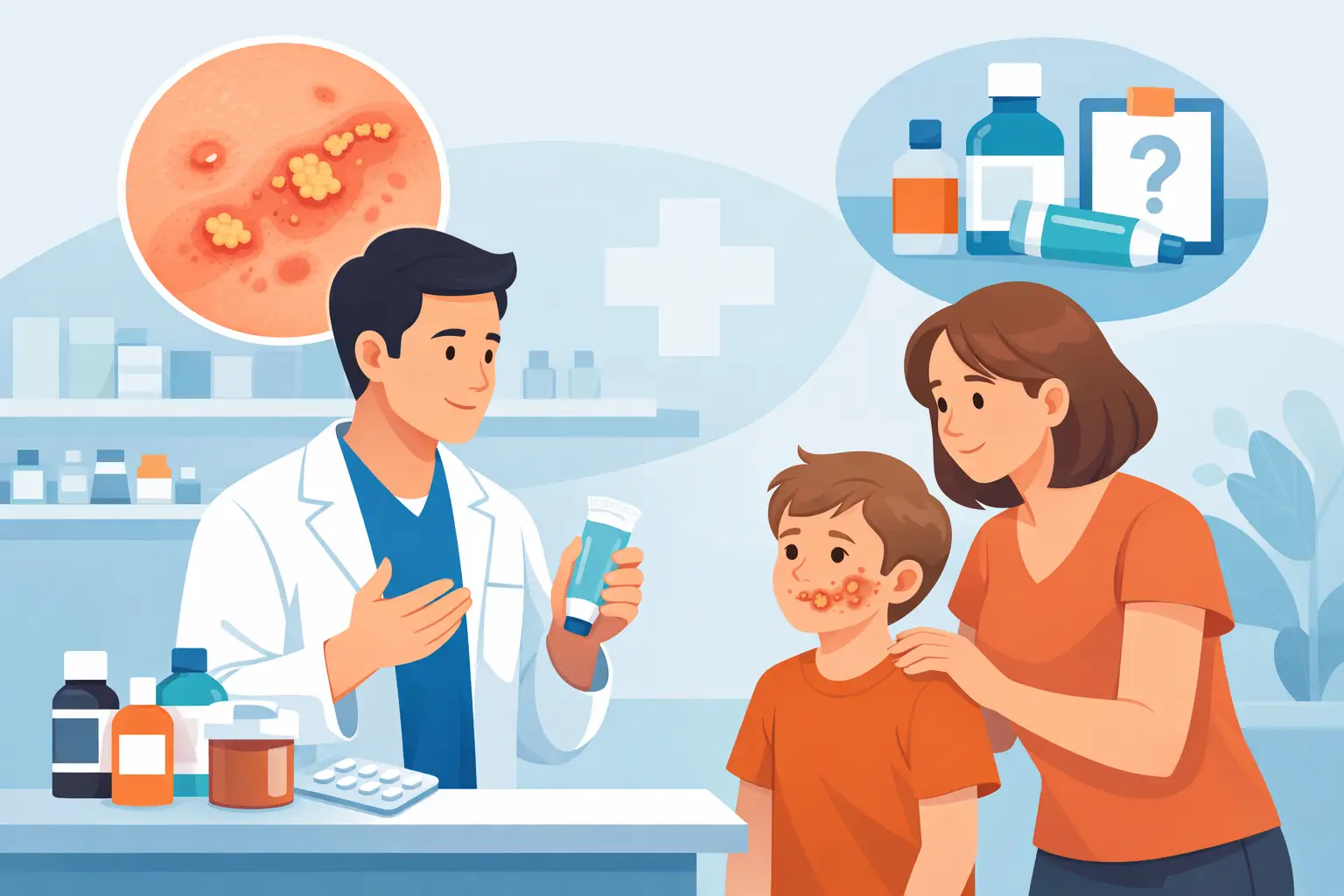
Can a Pharmacy Treat Impetigo? What to Do
Impetigo can appear quickly: a small red sore, often around the nose or mouth, develops into a blister or a familiar golden-brown crust. It is common, highly contagious and understandably worrying, particularly when it affects a child. So, can a pharmacy treat impetigo? A pharmacist can assess many mild cases, advise on preventing spread and, where an appropriate prescribing service is available, arrange treatment if it is clinically suitable.
The right route depends on where the rash is, how extensive it is, how long it has been present and whether the person feels unwell. Prompt advice matters because impetigo can spread to other areas of skin and to other people through close contact.
What impetigo looks like
Impetigo is a bacterial skin infection. It usually starts as red patches, spots or small blisters that burst and leave crusty sores. The crust is often described as honey-coloured. The skin may feel itchy or sore, but most people are otherwise well.
Non-bullous impetigo is the most common type and tends to cause small crusted patches, especially on the face, hands or exposed skin. Bullous impetigo causes larger, fluid-filled blisters and is more likely to affect babies and young children. A pharmacist or prescriber will also consider whether the rash could be something else, such as eczema that has become infected, cold sores, chickenpox or another skin condition.
A clear photo can be useful for an online assessment, provided it is taken in good light and shows both the affected area and the surrounding skin. However, photographs do not replace an in-person examination when symptoms are severe, unclear or affecting a sensitive area.
Can a pharmacy treat impetigo in the UK?
A pharmacy is often a sensible first place for advice when impetigo appears mild and localised. The pharmacist can ask about the symptoms, assess whether self-care is appropriate and explain whether antibiotic treatment may be needed. Some pharmacies have an independent prescriber or provide access to an online clinician who can assess suitable patients and issue a private prescription where appropriate.
Treatment is not identical for everyone. A small number of localised patches may sometimes be managed with a prescribed topical antibiotic. More widespread impetigo, recurrent infection or symptoms affecting several parts of the body may need antibiotic tablets instead. The choice of medicine, dose and duration should be decided by a qualified prescriber, taking account of age, allergies, pregnancy, other medicines and the appearance of the infection.
Antibiotics are not always the automatic answer. Using them when they are unlikely to help contributes to antibiotic resistance and can cause side effects. That is why a proper assessment is more useful than simply choosing an over-the-counter cream. Standard antiseptic creams and moisturisers may soothe damaged skin but should not be relied upon to cure an active bacterial infection unless a healthcare professional has advised this.
For adults who value discretion and speed, an online consultation can be a practical option for straightforward symptoms. You complete a medical questionnaire, provide clear details and, if requested, suitable images. A prescriber reviews the information and decides whether treatment can be supplied or whether you need a different level of care. This avoids unnecessary travel while retaining professional clinical oversight.
What to do while you wait for advice
Impetigo spreads easily through skin contact and through items that touch the affected skin. Good hygiene reduces the chance of passing it on while treatment takes effect.
Gently wash the affected area with soap and water, then pat it dry with a clean towel. Do not pick crusts or scratch the skin, even if it itches. Keep fingernails short, wash hands regularly and avoid sharing towels, flannels, bedding, clothing, razors or cosmetics. Covering the sores loosely can help protect them, particularly if they are on the hands or another exposed area.
Try to avoid close skin-to-skin contact, including contact sports, until a clinician has advised that the infection is no longer contagious. If impetigo affects a child, check the setting’s return policy as well as following clinical advice. Wash towels, bedding and clothing used by the affected person separately at a hot temperature where the fabric allows.
If antibiotics are prescribed, use them exactly as directed and complete the course unless the prescriber tells you otherwise. Do not share leftover antibiotics or use medication prescribed for someone else. Improvement is often seen within a few days, but the skin can take longer to fully heal.
When pharmacy advice may not be enough
A pharmacist can help you choose the safest next step, but some situations need urgent medical assessment rather than an online or pharmacy-led consultation. Seek urgent help if the person has a high temperature, seems very unwell, has rapidly spreading redness or swelling, severe pain, or red streaks extending from the rash. These can be signs that the infection is affecting deeper layers of skin.
You should also seek prompt medical advice if impetigo is close to the eyes, affects the eyelids, covers a large area, or occurs in a very young baby. The same applies if the person has a weakened immune system, poorly controlled diabetes or a significant skin condition that makes the rash difficult to assess.
If treatment has started but the sores are getting worse, spreading after a few days or not improving as expected, arrange a review. Repeated impetigo can sometimes be linked to infected eczema, frequent skin damage, close household transmission or bacteria carried in the nose. A clinician can investigate the pattern and advise on preventing further episodes.
Protecting the skin after impetigo
Once the infection has settled, the skin may remain pink, dry or slightly discoloured for a while. This does not necessarily mean the infection is still active. Avoid harsh scrubs, fragranced products and picking at healing skin, as these can slow recovery and create another break in the skin barrier.
Keeping skin clean and well moisturised can be particularly helpful for people prone to eczema or dry, cracked hands. Treat cuts, insect bites and grazes promptly by cleaning them and covering them where needed. Impetigo bacteria often enter through small breaks in the skin, so everyday skin care has a real role in prevention.
A quick check before seeking treatment
When speaking to a pharmacist or completing an online consultation, be ready to explain when the rash started, where it is located, whether it is spreading, and whether there is pain, itching, fever or weeping. Mention any recent new medicines, known allergies, pregnancy or breastfeeding, and any previous reaction to antibiotics. These details help the clinician make a safer decision without delay.
It can also help to say whether anyone else in your household has similar sores. Impetigo is common and treatable, but early assessment and careful hygiene make a meaningful difference. If you are unsure whether a rash is impetigo, a regulated pharmacy or prescriber can give you a clear, practical next step rather than leaving you to guess.