




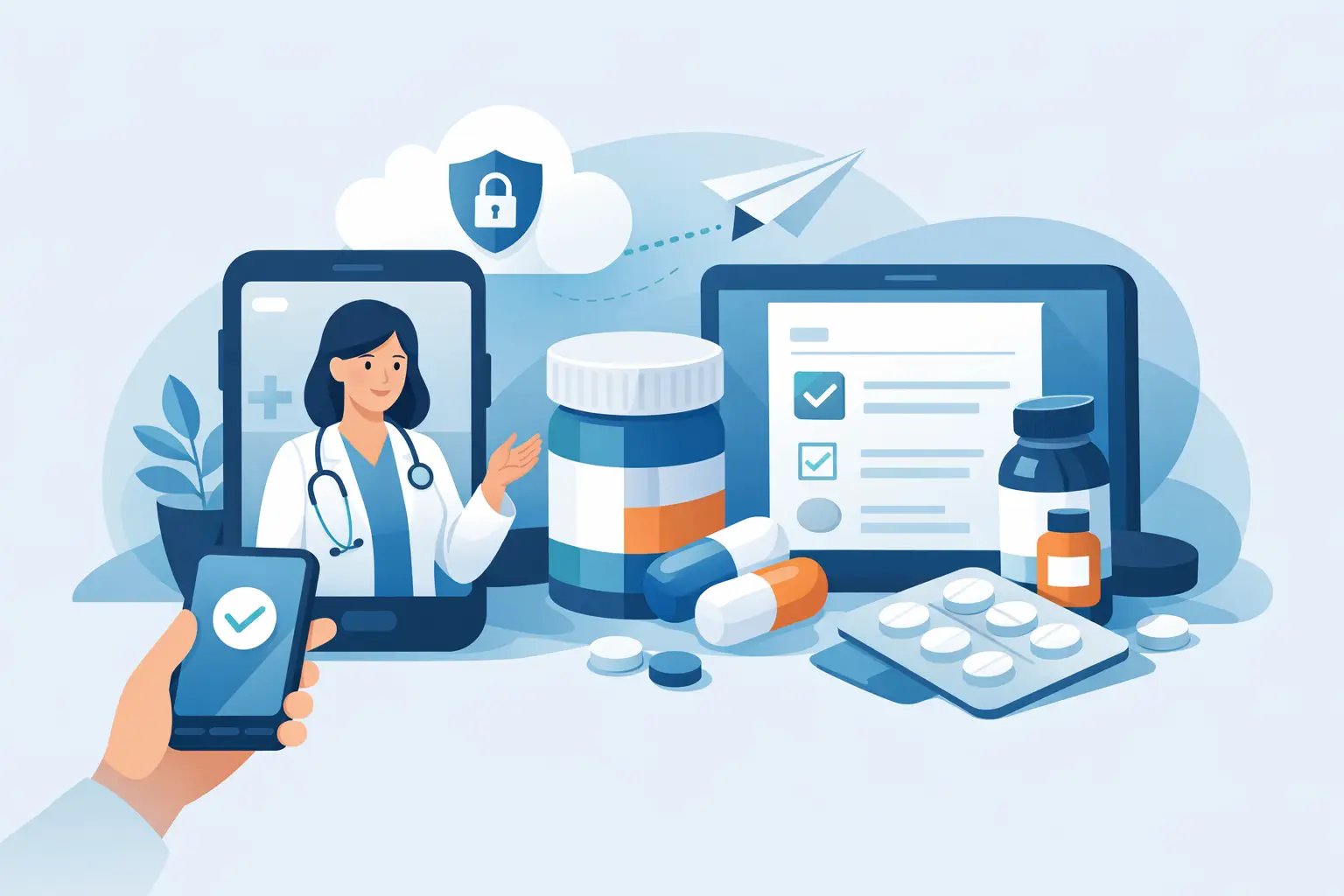
A Guide to Private Online Prescriptions
If you need treatment quickly, the hardest part is often not the condition itself – it is finding time for appointments, travelling to collect medicine, and dealing with the lack of privacy that can come with face-to-face requests. This guide to private online prescriptions explains how the process works, what to expect, and how to tell whether an online provider is safe to use.
For many adults in the UK, online prescribing now fills a very practical gap. It gives you a way to access treatment for suitable conditions without putting your day on hold. That can be especially helpful for sensitive concerns such as erectile dysfunction, thrush, period delay, cystitis, hair loss, acne, cold sores or weight loss treatment, where speed and discretion matter just as much as the medicine itself.
What private online prescriptions actually are
A private online prescription is issued by a qualified prescriber after reviewing your medical information remotely. Instead of booking a traditional appointment, you complete an online consultation, answer questions about your symptoms and health history, and the prescriber decides whether treatment is appropriate.
If it is, a prescription can be issued and the medicine supplied by the pharmacy. If it is not, a responsible provider should explain why treatment cannot be offered online or whether a different route is safer.
That point matters. Online prescribing is not simply online shopping for medicine. It is still a clinical decision. The convenience is real, but it should sit alongside proper checks, clear eligibility criteria and regulated pharmacy oversight.
A guide to private online prescriptions: how the process works
The process is usually straightforward, but it should never feel careless. A reputable service will ask enough questions to assess whether the medicine is suitable for you.
You normally start by choosing the condition or treatment you need. You are then taken through an online consultation covering symptoms, current medicines, allergies, medical conditions and other relevant details. Some services may ask for further information before approving treatment, especially if the condition has risks, the symptoms are unclear or the medicine needs closer review.
Once a prescriber has assessed the consultation, one of three things usually happens. The treatment is approved, an alternative is suggested, or you are advised to seek another form of care. That balance is a good sign. If every request appears to be approved with no meaningful checks, that should raise concern.
When approved, the medicine is dispensed by the pharmacy and sent out discreetly, often with next-day delivery options. For busy patients, this is where online prescribing becomes especially useful. You can deal with a routine health issue in one sitting, without needing to reorganise work, childcare or travel.
Why people choose online prescribing
The main reasons are speed, privacy and simplicity. For many people, the issue is not whether they can eventually get treatment. It is whether they can do it in a way that fits real life.
Private online prescriptions can be a good option when the condition is straightforward and the treatment pathway is well established. Common examples include migraine, acid reflux, eczema, rosacea, bacterial vaginosis, contraception, malaria prevention, genital herpes, premature ejaculation and stop smoking support. In these cases, online consultations can make access much easier while still keeping the clinical review in place.
Privacy is another major factor. Some conditions feel difficult to discuss in person, even when they are common. Men’s health and women’s health treatments are often requested online for exactly that reason. A private digital consultation gives patients space to answer honestly and seek help earlier, which can be better than delaying treatment out of embarrassment.
What to check before using an online prescription service
Trust should come before convenience. Before ordering any prescription medicine online, make sure the provider is operating as a regulated UK pharmacy and is clear about who is responsible for prescribing and dispensing.
Look for visible registration details, pharmacy premises information and named healthcare professionals. A legitimate provider should not hide who they are. You should be able to see that there is proper pharmacy oversight and that prescribing decisions are made by qualified clinicians.
The consultation itself is another clue. Safe services ask sensible medical questions and do not treat every request as a retail transaction. They should also explain side effects, suitability, and when a medicine should not be used. Clear contact details, patient support and delivery information all help build confidence too.
Price matters, but it should not be the only factor. A very cheap medicine from an unclear source is rarely good value if you cannot be sure what you are receiving or whether it is right for you.
When online prescriptions are a good fit – and when they are not
Online care works best for conditions that can be assessed safely through structured questions and where treatment is relatively well defined. That is why it is often suitable for issues such as cold sores, thrush, acne, erectile dysfunction, period delay, allergy treatment or hair loss.
There are limits, though. Some symptoms need a physical examination, urgent assessment or further investigation. Severe pain, chest symptoms, breathing difficulties, sudden neurological changes, unusual bleeding, or symptoms that do not match a clear treatment pathway should not be managed through a simple online request.
There are also grey areas. A condition may sound routine but become unsuitable for online treatment because of your age, medical history, other medicines or pregnancy status. That is why the answer is sometimes, it depends. Good online prescribing is not about saying yes quickly. It is about deciding carefully.
The benefits of using a pharmacy-led service
There is extra reassurance in using a service where the prescribing and supply process sits within a regulated pharmacy environment. It means the clinical review, dispensing and patient support are part of the same care pathway rather than scattered across different providers.
For patients, that often makes the experience simpler. If you have a question about the medicine, delivery, dosage or suitability, there is a clearer route to support. It also reduces the sense that you are dealing with an anonymous website.
This is where established providers such as Your Chemists can feel more dependable to patients who want modern convenience without giving up professional oversight. The digital experience may be quick, but the standard of care should still feel grounded, accountable and safe.
Common concerns about private online prescriptions
One common concern is whether online treatment is genuinely safe. The answer depends on the provider and the condition. When the service uses proper consultations, qualified prescribers and regulated pharmacy processes, online prescribing can be a safe and effective route for many routine healthcare needs.
Another concern is whether it is too impersonal. Some patients expect online care to feel cold or transactional. In practice, many prefer the clarity of a well-designed consultation, especially for conditions they would rather not discuss in a waiting room. What matters is that the service is clear, responsive and clinically responsible.
People also worry about receiving the wrong treatment. That risk is exactly why consultation quality matters. The more relevant information the provider collects, the better the prescribing decision is likely to be. Honest answers from patients are part of that. Leaving out medicines, symptoms or medical history can affect whether the treatment is safe.
How to get the best from an online consultation
Take a few extra minutes to complete the consultation properly. Read each question carefully and answer truthfully, even if a detail seems minor. Mention other medicines, long-term conditions, allergies and whether your symptoms have changed.
It also helps to know what outcome you want, while staying open to clinical advice. You might request a specific treatment, but the prescriber may recommend another option or decide that online treatment is not appropriate. That is not a failure of the service. It is evidence that the review is doing its job.
If treatment is supplied, read the patient information and follow the instructions exactly. Fast access is useful, but medicines still need to be used correctly to work well and reduce risk.
Private online prescribing is not meant to replace every part of healthcare. It is there to make access easier where online treatment is suitable, safe and practical. For many people, that means less delay, more privacy and a much simpler route to getting the help they need – which is often exactly what good care should feel like.