



Ear Wax Removal Pharmacy: What to Expect
Blocked ears can make everything sound distant. Voices feel muffled, the television creeps up louder than usual, and hearing on the phone becomes a struggle. When that happens, many people start searching for an ear wax removal pharmacy because they want straightforward help close to home, without the wait and inconvenience of trying to arrange a GP appointment for something that may be treated quickly.
Why people choose an ear wax removal pharmacy
Ear wax is normal. It helps protect the ear canal by trapping dust, debris and bacteria. In most cases, it moves out of the ear naturally and causes no trouble at all. The problem comes when wax builds up, becomes impacted, or is pushed deeper into the ear.
That is often when symptoms begin. You might notice reduced hearing, a feeling of fullness in the ear, discomfort, itching, ringing in the ear, or dizziness. Sometimes it affects one ear, sometimes both. It can develop gradually, so people do not always realise how much it is affecting them until they seek help.
A pharmacy-based ear wax service appeals to many patients for one simple reason – convenience. You can access professional care in your local community, often more quickly than through other routes. For busy working adults, older patients, and families trying to fit healthcare around everyday life, that matters.
There is also reassurance in being seen by a trained healthcare professional in a familiar local setting. An independent community pharmacy offers practical care without making the process feel complicated.
When ear wax removal is worth booking
Not every blocked ear needs treatment straight away, and not every ear problem is caused by wax. That is why a proper assessment matters.
If your hearing has become muffled, your ears feel blocked, or you have recurring wax build-up, it may be sensible to book an appointment. This is especially common for people who wear hearing aids, use ear buds regularly, or naturally produce more wax than average. Some people find it becomes an ongoing issue rather than a one-off problem.
It is also worth being realistic about home remedies. Over-the-counter olive oil or softening drops can help in some cases, but they do not always solve the problem. If the wax is hard or deeply impacted, drops may soften it without removing it fully. That can leave you waiting longer while symptoms continue.
At the same time, it depends on what else is going on. Ear pain, discharge, sudden hearing loss, or symptoms linked to infection need careful consideration. Those are not situations to ignore or assume are simply wax. A professional assessment can help decide the safest next step.
What happens at an ear wax removal pharmacy appointment
For many patients, the main worry is not the wax itself but the unknown. They want to know what will happen, whether it will hurt, and how long it takes.
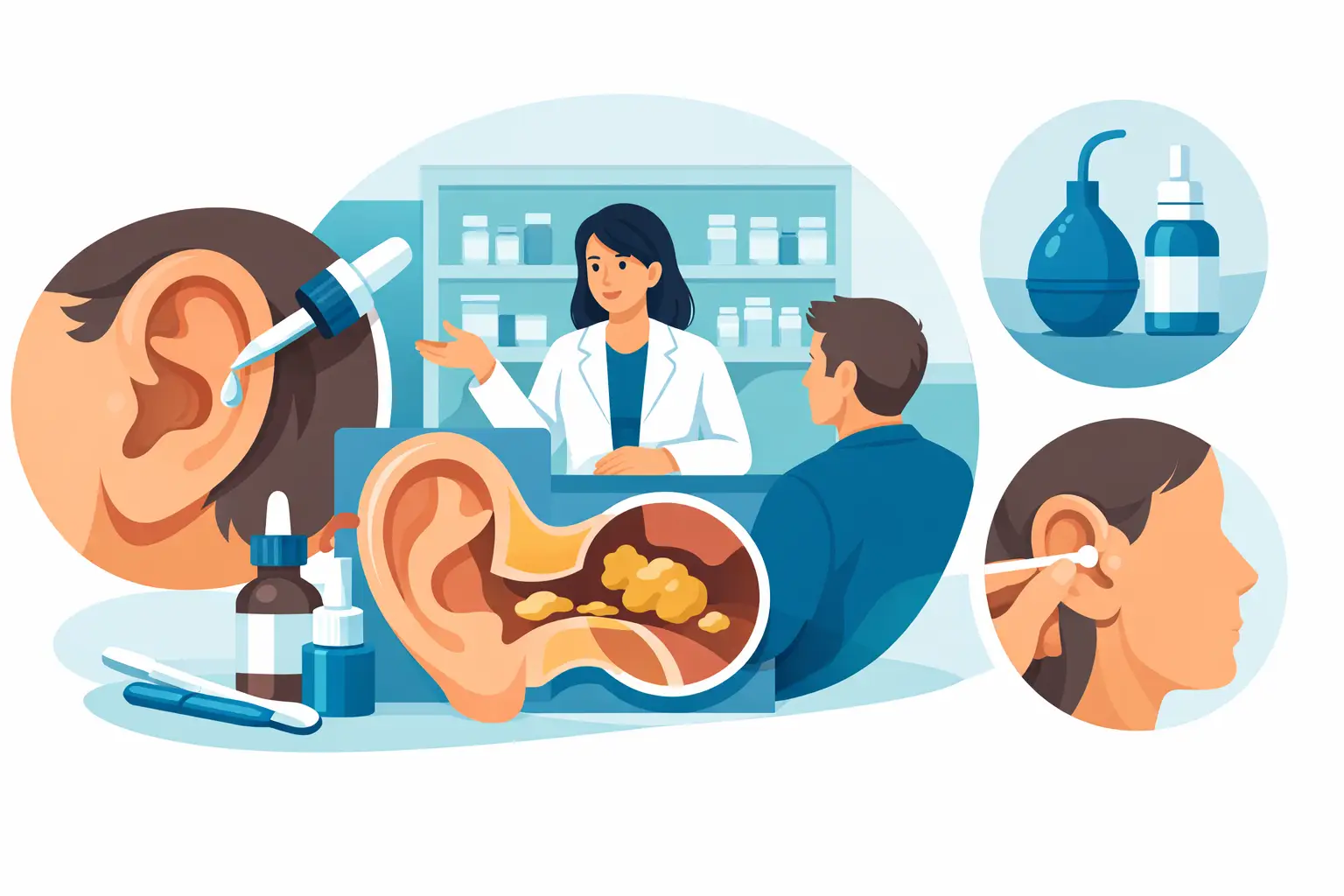
An appointment usually begins with a discussion about your symptoms, any ear history, and whether you have used softening drops. The clinician will examine your ear canal to check whether wax is present, how much there is, and whether removal is suitable on the day.
If treatment goes ahead, the method used may depend on the type of wax and the condition of the ear. Microsuction is commonly chosen because it is precise and does not involve flushing the ear with water. It uses gentle suction to remove wax under direct visual guidance. Many patients find it quick and more comfortable than they expected.
That said, no treatment is one-size-fits-all. Sometimes wax is too hard to remove immediately and a few more days of softening drops are recommended first. In other cases, the ear may need to be left alone if there are signs of irritation, infection, or another underlying issue. Good care is not about forcing treatment through. It is about doing what is safe and appropriate.
Why professional removal is safer than trying it yourself
When ears feel blocked, it is tempting to reach for cotton buds, ear candles, or online gadgets. Unfortunately, those options often make things worse.
Cotton buds tend to push wax further in rather than lifting it out. Ear candles are not recommended and can cause burns or injury. Home tools bought without proper guidance can scratch the ear canal or damage the eardrum if used incorrectly.
The ear is delicate, and symptoms that seem simple are not always simple. Professional ear wax removal means the ear is assessed properly first. If the problem is not wax, that can be recognised early. If wax is the issue, treatment can be carried out in a controlled, clinical setting.
That combination of assessment and treatment is what many patients are really looking for. They do not just want something removed. They want confidence that it is being handled properly.
Ear wax removal pharmacy services and local access
One of the advantages of choosing an ear wax removal pharmacy is that care is available where people already manage many of their health needs. Community pharmacies are increasingly becoming the first place people turn for support with everyday conditions, preventative care and private clinic services.
That model suits ear care particularly well. Blocked ears are uncomfortable, frustrating and disruptive, but they are also the kind of issue people would rather sort quickly and locally if possible. A nearby pharmacy clinic offers that balance of accessibility and professional support.
For patients in Gorleston, Great Yarmouth and the surrounding Norfolk area, this kind of local access can make a real difference. Instead of putting up with muffled hearing or spending weeks wondering whether it will clear on its own, you can arrange an appointment and have the ears checked properly. At Gorleston Pharmacy, that means practical care delivered in a familiar community setting.
How to prepare before your appointment
Preparation is usually simple, but it can make treatment more effective. Many services advise using olive oil drops for a few days beforehand to soften the wax. This is not always essential, but it often helps, especially if the wax is dry or compacted.
It is best to follow the instructions given when booking, because advice can vary depending on your symptoms and medical history. If you have had ear surgery, a perforated eardrum, recurrent infections, or only have hearing in one ear, that should always be mentioned in advance.
Try not to put anything into the ear before your appointment apart from recommended drops. That includes cotton buds and other cleaning tools. Keeping the ear undisturbed gives the best chance of safe assessment and successful removal.
What happens after wax removal
Many people notice an immediate improvement. Sounds seem clearer, background noise feels more balanced, and that heavy blocked sensation eases. If hearing has been reduced for some time, the difference can be surprisingly noticeable.
Some patients experience mild sensitivity afterwards, particularly if the wax had been impacted for a while. That usually settles quickly. You may also be given advice on preventing future build-up, especially if this is a recurring problem.
Prevention is not always straightforward, because ear wax production varies from person to person. Some people never need treatment again. Others may benefit from occasional maintenance appointments. Hearing aid users, in particular, can be more prone to wax build-up because the device can affect the ear’s natural clearing process.
Choosing the right service for peace of mind
If you are comparing options, the key things to look for are clinical experience, clear explanations, and a setting where you feel comfortable asking questions. Price matters, but confidence in the service matters too.
A good ear wax removal appointment should not feel rushed. You should know what is being checked, whether treatment is suitable, and what the next step is if wax cannot be removed immediately. That level of communication helps patients feel reassured, particularly if they are nervous about having anything done to their ears.
It is also worth remembering that sometimes the best outcome is being told the problem is not wax and needs a different route of care. That can save time and prevent the wrong treatment.
If your ears feel blocked, your hearing seems dulled, or you have been relying on home remedies without much success, getting professional advice is often the simplest way forward. A trusted local pharmacy can offer the kind of practical, community-based care that helps you feel looked after and heard properly again.